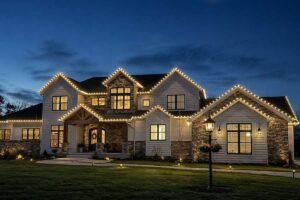
With the right outdoor landscape lighting ideas, your yard should still look nice even after the sun goes down. It will help your outdoor space look more attractive and feel more complete at night. A few good lighting choices can change the way your yard looks and help different parts of it stand out more clearly.
In this guide, you will find simple landscape lighting ideas, helpful setup tips, and useful answers that can help you choose what works best for your home.
12 Outdoor Landscape Lighting Ideas
Some lighting designs help improve visibility, while others help bring more focus and style to different parts of the space. The best results usually come from choosing ideas that match your layout and the way you use your outdoor areas. Below are some simple exterior lighting designs that can help you plan:
1. Pathway Lighting
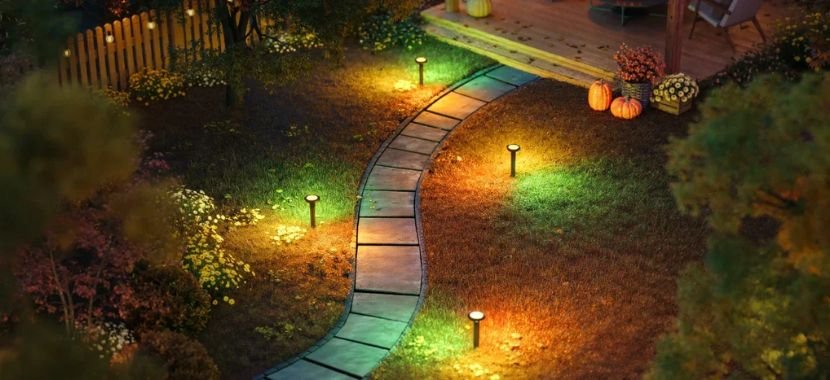
Pathway lighting makes walkways safer and gives your yard a more polished look. In most homes, lights in the 100 to 200 lumen range work well because they guide the path without feeling too bright. You can place them about 6 to 8 feet apart for even coverage. A staggered layout usually looks more natural than placing lights directly across from each other. Soft downward lighting works best because it keeps the path visible without adding glare. LED fixtures are a smart choice because they last longer and use less energy.
2. Driveway Lighting
Driveway lighting improves visibility at night and gives your home a more polished look. In most cases, spacing the lights about 10 to 15 feet apart works well because it keeps the coverage even without making the area feel too bright. It also helps to keep the placement balanced on both sides.
At the same time, you should avoid very bright fixtures, as too much glare can make the driveway less comfortable to use. LED lights are often the best choice here because they last longer and use less energy.
3. Step Lighting
Low-light situations can make your stairs unsafe if they are near decks, patios, or yard steps. That is why step lighting is such a practical choice. A soft output usually works best, that’s why in many homes, 50 to 150 lumens is enough for each step. Instead of placing the fixture on the tread, it is better to install it on the vertical face of the step so that the light falls downward more cleanly. When the spacing stays even, the whole stair area feels safer and easier to use. LED fixtures are often preferred because they are durable and need less upkeep.
4. Tree Uplighting
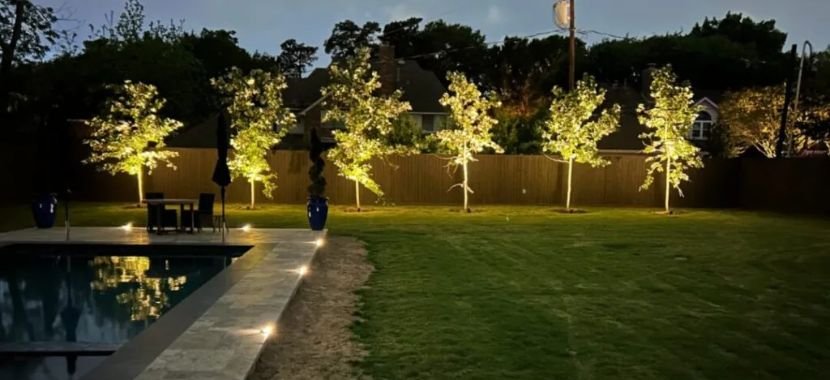
Trees can easily get lost in the dark, even if they are a key part of your yard. Uplighting helps bring them back into focus and adds depth to the space. A simple way to do this is by placing the light close to the base, usually about 6 to 12 inches from the trunk, and aiming it upward. Smaller trees need softer light, while larger ones often need stronger output to reach the top. In many cases, using more than one fixture gives a more balanced result. When done right, this creates a natural highlight instead of a harsh spotlight.
5. Garden Accent Lighting
You do not need to light every part of your garden. In many cases, lighting a few special spots looks better. This type of lighting works well for plants, small trees, statues, or other garden features. A narrow light works best because it keeps the light on one area instead of spreading it too far. In most gardens, a soft light is enough to make the space look nice without making it feel too bright. When you use it well, your garden looks calmer and well-arranged.
6. Moonlighting
Moonlighting gives your yard a soft and calm look at night. You place the lights high in a tree or on a nearby structure, so the light shines downward from above. This creates a more natural feel, much like real moonlight. It also works well in seating areas, open lawns, and quiet garden spaces. A warm light is usually the best choice because it feels gentle and comfortable. When the light passes through branches, it can also create soft shadows on the ground.
7. Wall Wash Lighting
Wall wash lighting works well when you want to brighten a plain outdoor wall. It spreads light across the surface and helps bring out the color and texture. This looks especially nice on stone, brick, or painted walls. To get a smooth result, the lights should sit a short distance away instead of too close to the wall. If they are placed well, the wall looks clean, soft, and more noticeable at night.
8. String Lighting
String lighting is a simple way to make an outdoor space feel warm and inviting. It works especially well over patios, decks, and seating areas. You can hang the lights across a pergola, fence, or open space to give the area a soft glow. If you plan to use this idea in your own space, it helps to know how to hang outdoor string lights the right way for a neat and lasting setup. LED string lights are a good choice because they use less energy and last longer. When they are placed at a comfortable height, the whole space feels more relaxed and easy to enjoy.

9. Water Feature Lighting
If you have a pond, fountain, or pool, lighting can make it stand out beautifully at night. It helps bring out the movement in the water and makes the whole area feel more alive. You should always use lights that are made for wet areas, usually with an IP68 rating, so they can handle underwater use safely. In many setups, it works well to place the light just below the water surface and aim it upward.
10. Motion Sensor Lighting
Motion sensor lighting is a smart choice if you want a little more safety around your home. It turns on when someone walks by, so it works well near doors, garages, side paths, and darker corners. In many homes, this kind of light is most useful in spots where you do not want the light on all night. It also helps save energy because it only comes on when needed. For the best result, place the sensor where it can catch movement clearly without being triggered all the time.
11. LED Strip Lighting
LED strip lighting is a great option if you want a clean and modern look. You can use it under railings, along steps, or even under benches to create a soft glow. It works best when the strip is hidden.
For outdoor use, you should choose waterproof strips, usually with an IP65 rating or higher, so they can handle rain and dust. When placed well, this type of lighting adds a smooth and subtle effect without making the space feel too bright.
12. Smart Lighting
Through Smart lighting, you can control your outdoor lights. You can turn them on or off using your phone, and in many cases, you can also set timers or adjust brightness. This works well if you want your lights to come on automatically in the evening or change based on your routine. It also gives you more flexibility without needing to change the fixtures. Once set up, it saves time and makes your lighting feel more convenient to use.
Landscape Lighting Setup Tips
Good lighting is not only about choosing the right fixtures. The way you place and use your lights can make a big difference in how your yard looks at night. Before adding more fixtures, you know the tips below that can make the setup look better:
- Start by lighting one main area first, then expand instead of installing everything at once.
- Keep brightness balanced so that your eyes can adjust comfortably across the whole yard.
- Use warm light to avoid the cold and overly sharp look at night.
- Highlight a few key features instead of trying to light every part of the space.
- Make the lighting feel more natural and leave some areas darker to create contrast.
- Hide fixtures behind plants or structures so the light stands out, not the source.
- Check your lighting from different angles, including from inside your home.
- Avoid placing lights too close to walls or objects to prevent harsh shadows.
- Use timers or smart controls so that your lighting runs without daily effort.
- Dust and dirt can quickly reduce brightness, so clean fixtures regularly.
Final Thoughts
In the end, the best landscape lighting ideas are the ones that suit your yard and make the space easier to enjoy at night. You do not need too many lights to make a difference. A well-planned setup can help your outdoor space look better, and understanding the benefits of outdoor lighting can help you make better choices for your home.
So, if you are looking for an outdoor landscape lighting contractor near me, then you can also reach out to Alba Lights for professional outdoor light design installation and other outdoor lighting solutions.
Frequently Asked Questions
What are the best landscape lighting ideas for a small yard?
For a small yard, it is better to keep the lighting simple and focused. You can use pathway lights, a few accent lights for plants, and soft lighting for seating areas. A minimal setup often looks cleaner and avoids making the space feel crowded.
What areas should you light first in a landscape lighting plan?
You should start with areas that are used most often, such as walkways, steps, and entry points. These areas need clear visibility at night. After that, you can add lighting to highlight trees, walls, or garden features.
How many lumens do you need for outdoor landscape lighting?
The right brightness depends on the area. Paths and small garden spaces usually need softer light, while larger features need stronger output. It is better to begin with lower brightness and adjust based on how the space looks at night.
What are the benefits of using low-voltage landscape lighting?
Low-voltage lighting is safer and easier to install in most homes. It uses less power while still providing enough light for paths, gardens, and outdoor features. It is also a reliable option for long-term use.
When is solar landscape lighting a good option?
Solar lighting works best in areas that receive direct sunlight during the day. It is useful for simple setups where wiring is not practical. However, it may not provide consistent brightness in shaded or cloudy conditions.
How can you set up DIY landscape lighting at home?
You can start with simple areas like pathways or garden edges using ready-to-install kits or solar lights. It is better to begin small and expand your setup as needed.